
How Existing Structures Limit What You Can Achieve
When homeowners begin planning a renovation, extension, or major refurbishment, the focus usually starts with possibilities. People imagine larger rooms,

When homeowners begin planning a renovation, extension, or major refurbishment, the focus usually starts with possibilities. People imagine larger rooms, open plan layouts, brighter interiors, and better use of space. What often receives less attention at the beginning is the reality of the structure that already exists.
Every building has structural boundaries. Walls support loads. Foundations carry weight. Rooflines define ceiling heights. Drainage routes determine where plumbing can go. Even window placement influences how space can be used. These elements quietly shape what can and cannot be achieved in a renovation project.
Understanding these structural realities early in the process saves time, money, and frustration. Builders, architects, and designers regularly work within the constraints of existing buildings. In fact, many of the best renovation projects succeed because they respect these limitations rather than fighting them.
Structural Walls Define What Can Be Removed
One of the most common requests in renovation projects is removing walls to create open plan living spaces. While this is often possible, not every wall can simply be taken down.
Many internal walls are load bearing. These walls support the weight of floors above, roof structures, or other parts of the building. Removing them without proper structural support would compromise the stability of the entire property.
When a load bearing wall is removed, builders usually install steel beams to transfer the weight elsewhere. However, installing these beams requires careful calculations, structural engineering approval, and sometimes additional support points such as columns or pad foundations.
This means that although open plan layouts are achievable, the exact placement and size of spaces may still depend on where structural loads exist within the building.
Foundations Limit Expansion
Extending a home is not simply about adding more walls and a roof. Everything begins with the foundations.
Older properties often have foundations that were designed for a different era of construction standards. In many cases they may be shallow or built with materials that would not meet modern requirements.
When extensions are added, builders must ensure that the new foundations integrate safely with the existing structure. Sometimes the existing foundations cannot support additional loads or changes to the structure above.
In these situations, the design of the extension may need to change. The size, layout, or construction method might be adjusted to ensure the building remains structurally sound.
For example, a single storey extension might be possible where a two storey addition would place too much strain on the existing foundations.
Roof Structures Affect Interior Layout
Roof design plays a major role in determining how spaces inside a property can be used.
Traditional roofs often rely on timber rafters that create usable loft spaces. Modern trussed roofs, on the other hand, use triangular structures that occupy much of the loft area. These trusses cannot simply be removed without significant structural alterations.
For homeowners considering loft conversions, this difference matters. Converting a traditional rafter roof may be relatively straightforward, while altering a trussed roof typically requires substantial structural redesign.
Even within the main living areas, roof structures influence ceiling heights, window placement, and the potential for adding skylights or dormers.
In many renovation projects, architects must design spaces that work within the geometry of the existing roof rather than completely changing it.
Drainage and Plumbing Restrict Room Placement
Bathrooms, kitchens, and utility rooms depend heavily on drainage systems. Waste pipes must connect to the existing soil stack or external drainage network.
Because of this, relocating plumbing intensive rooms can be more complicated than it first appears.
Running long drainage routes through a property may require floor alterations, additional pipework, or even new connections to external drainage systems. In some cases, gravity drainage may not work over longer distances without raising floor levels.
This is why bathrooms in loft conversions are often placed above existing bathrooms. Doing so allows the new plumbing to connect more easily with the existing drainage infrastructure.
Designing around these systems helps control both construction complexity and cost.
Window and Door Placement Influences Layout
Natural light is one of the most valuable elements in any building. Existing windows and doors therefore play a significant role in shaping interior design.
If windows are already positioned in certain locations, moving them may require structural changes to the wall or façade. In older properties, this can involve brickwork alterations that must match the original building materials.
Sometimes window placement limits how rooms can be arranged. For example, a wall with multiple windows may not allow for large pieces of furniture, kitchen units, or storage systems.
Rather than completely redesigning these walls, architects often incorporate the existing openings into the overall design.
This approach preserves the character of the building while working with its natural lighting patterns.
Ceiling Heights Create Design Boundaries
Ceiling height is another structural factor that cannot easily be changed without major reconstruction.
In many older homes, ceiling heights vary between floors. Ground floors may have generous height, while upper floors can be noticeably lower.
When extensions connect to existing rooms, matching these ceiling heights becomes an important design challenge.
Raising floors or lowering ceilings might be technically possible, but doing so introduces additional structural complexity. Instead, designers often create transitions between spaces that respect the existing building proportions.
This careful approach ensures the finished result feels natural rather than forced.
Party Walls and Neighbouring Structures
Properties in cities and towns often share walls with neighbouring buildings. These are known as party walls.
Altering a party wall requires compliance with legal frameworks such as the Party Wall Act in the UK. This process ensures that construction work does not negatively affect neighbouring properties.
Because of these regulations, certain alterations may require agreements with neighbours, structural surveys, and professional oversight.
This can influence both the timeline and scope of renovation projects. Builders must consider these factors early when planning structural changes that involve shared walls.
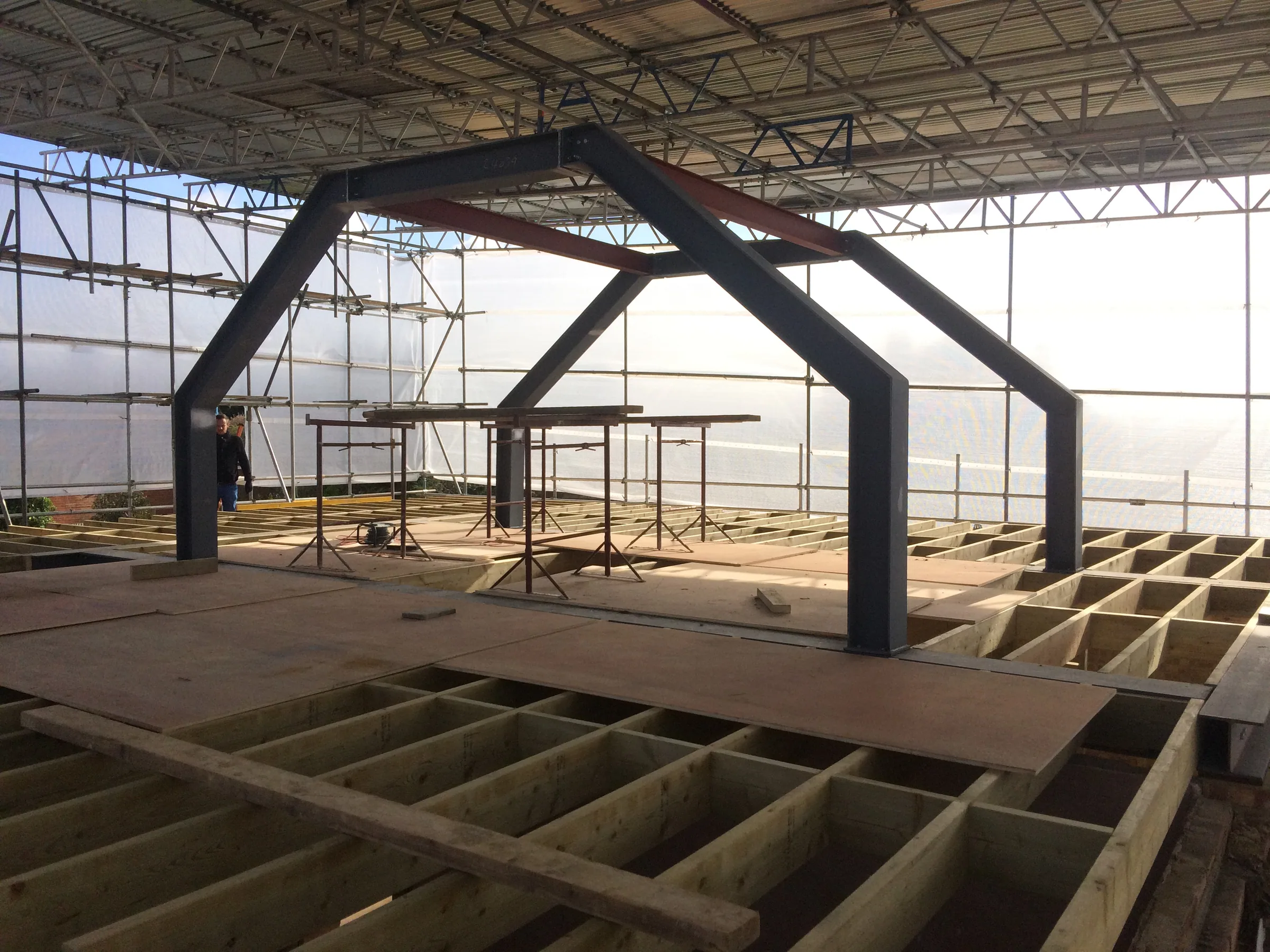
Structural Columns and Beams Cannot Always Be Relocated
In some buildings, columns or structural beams support the weight of upper floors or roof structures.
These elements are often positioned at key load transfer points. Removing or relocating them is rarely simple. Doing so may require installing large steel beams or redesigning significant portions of the structure.
As a result, these structural elements often become fixed reference points in renovation design.
Good architectural planning treats these features as part of the design rather than obstacles. In some cases, columns can even become visual features that define spaces within an open plan layout.
Floor Structure Limits Heavy Installations
Floors are designed to carry specific loads. Adding heavy materials such as stone flooring, large kitchen islands, or substantial built in storage can increase the weight the floor must support.
In older properties, floor joists may not have been designed for these loads.
Before installing heavy materials, builders often assess the strength of the floor structure. Reinforcement may be required to prevent sagging or structural damage.
Understanding these limits early helps avoid costly alterations later in the construction process.
Planning Regulations and Structural Realities
While structural constraints come from the building itself, planning regulations also influence what can be achieved.
Local planning authorities may restrict building height, extension size, or changes to the external appearance of a property.
When combined with the structural realities of the existing building, these regulations shape the final design.
Experienced builders and architects understand how to navigate both sets of limitations. Their goal is to create the best possible outcome while respecting structural safety and regulatory requirements.
Why Constraints Often Lead to Better Design
Interestingly, some of the most successful renovation projects arise from working within strict limitations.
Constraints encourage creativity. When designers cannot rely on drastic structural changes, they focus more carefully on layout, lighting, materials, and flow.
This often results in spaces that feel thoughtfully crafted rather than overly engineered.
A well designed renovation does not attempt to erase the character of a building. Instead, it enhances the strengths of the structure that already exists.
Final thoughts
Every building carries the story of how it was originally constructed. The walls, foundations, roof structures, and internal layout all reflect decisions made when the property was first built.
When planning renovations or extensions, these elements become the framework within which new ideas must fit.
Rather than seeing structural limitations as obstacles, successful renovation projects treat them as guiding principles. By understanding how the building works, architects and builders can design solutions that respect its integrity while improving functionality and comfort.
For homeowners and businesses considering renovation work, the most important step is working with experienced professionals who understand these structural realities. With the right planning and expertise, even complex buildings can be transformed into spaces that meet modern needs while remaining structurally sound.
Frequently asked questions
1. Can all internal walls be removed during a renovation?
No. Many internal walls are load bearing and support the structure above them. Removing these walls requires structural engineering and the installation of beams to maintain stability.
2. Do older homes have more structural limitations?
Older homes can present unique challenges, especially when foundations, roof structures, or materials differ from modern standards. However, they often provide strong structural frameworks that can still be adapted successfully.
3. Why do bathrooms in extensions often stay near existing bathrooms?
Keeping bathrooms close to existing plumbing simplifies drainage connections and reduces construction complexity. Moving them far from existing pipework may require significant structural alterations.
4. Can foundations be strengthened to support larger extensions?
In some cases foundations can be reinforced or underpinned. However, this process can be expensive and may influence whether certain extension designs are practical.
5. Do structural limitations mean my renovation ideas are impossible?
Not necessarily. Most ideas can be adapted rather than abandoned. Skilled designers and builders find solutions that work within structural constraints.
6. When should structural assessments happen in a renovation project?
Structural assessments should happen early in the planning stage. Understanding the building’s limitations before finalising designs helps prevent costly redesigns later.
About this guide. Written by the Milkov & Son Construction team and reviewed by Stoyan Milkov, Director & Project Manager. Cost figures are North London market guides for the year stated and not quotations; planning and Building Regulations summaries are general and should be confirmed for your property. About the company.


