
How Head Height Restrictions Shape Loft Conversion Design
Loft conversions are one of the most effective ways to add space and value to a property, particularly in areas where moving is costly or impractical.

Loft conversions are one of the most effective ways to add space and value to a property, particularly in areas where moving is costly or impractical. However, not every loft is immediately suitable for conversion. One of the most critical factors that determines feasibility, design, and cost is head height.
Head height restrictions influence almost every decision in a loft conversion, from layout and structural changes to insulation choices and staircase positioning. For homeowners and businesses considering a loft project, understanding how head height shapes design is essential for avoiding costly mistakes and achieving a usable, compliant, and comfortable space.
What Is Head Height and Why It Matters
Head height refers to the vertical distance between the floor and the ceiling at the highest point of the loft. In the UK, a minimum head height of around 2.2 metres is generally recommended before conversion, although this is not a strict legal requirement in all cases.
This measurement is important for several reasons:
- Usability: Low ceilings make spaces feel cramped and difficult to use comfortably
- Compliance: Building regulations require safe movement, particularly around stairs
- Design flexibility: More height allows for better layouts, storage, and lighting
- Property value: A well-proportioned loft room is more appealing to buyers
If the head height is insufficient, the entire approach to the conversion changes.
The Impact on Loft Conversion Types
Different loft conversion types are more or less suitable depending on available head height.
Roof Light Conversions
These are the least invasive and rely on existing roof structure. They work best when there is already sufficient height.
- Minimal structural changes
- Lower cost
- Limited design flexibility if height is tight
If the loft lacks height, this option often becomes impractical.
Dormer Conversions
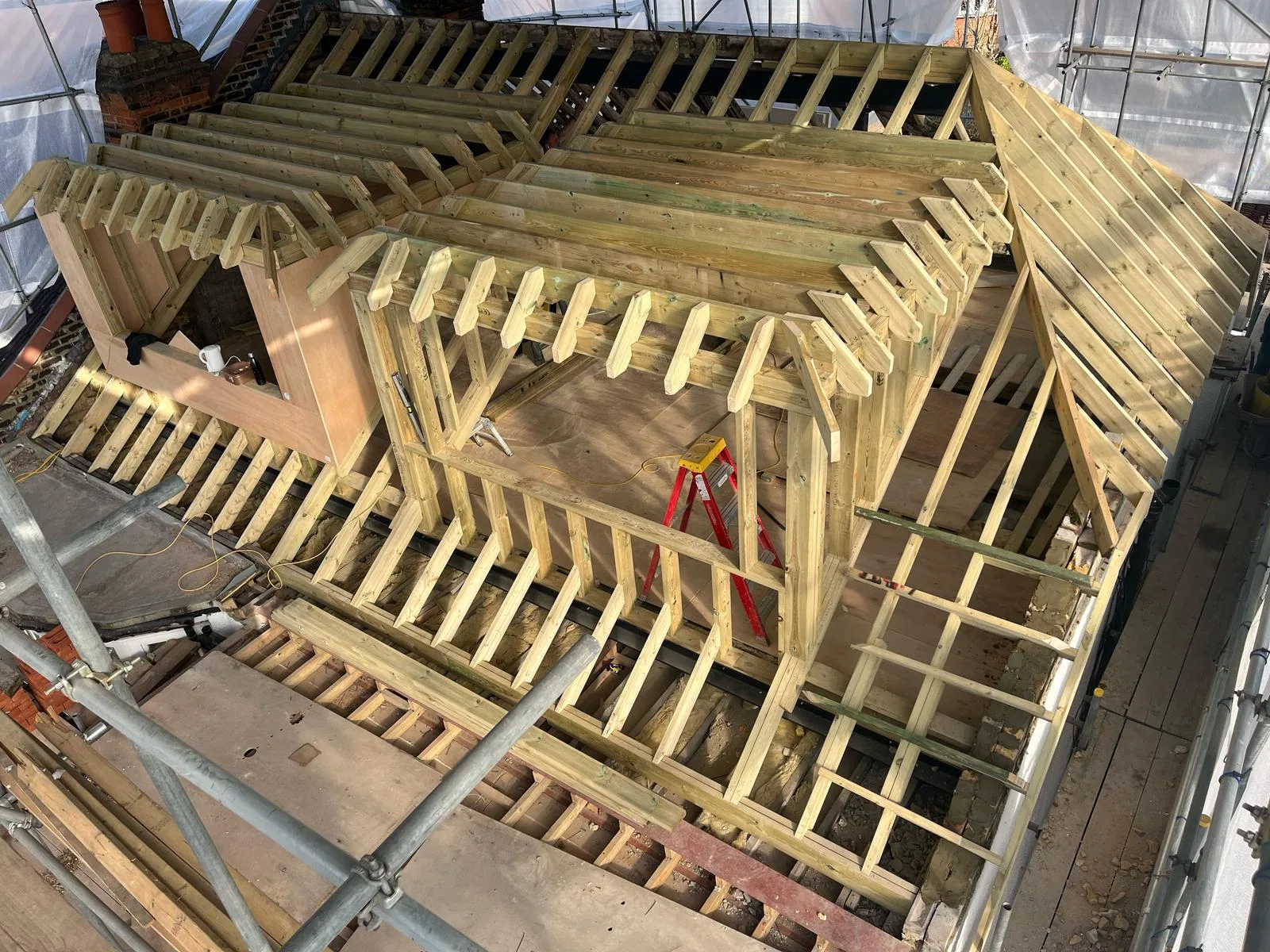
Dormers extend vertically from the roof, creating additional headroom.
- Increase usable floor area
- Improve head height in key zones
- Suitable for many properties with moderate restrictions
Dormers are often the first solution considered when head height is borderline.
Hip-to-Gable Conversions
Common in semi-detached or end-of-terrace homes, these extend the sloping side of the roof.
- Create more internal volume
- Improve overall head height distribution
- Often combined with dormers
This approach can transform a previously unusable loft.
Mansard Conversions
These involve significant structural alteration, replacing one side of the roof with a near-vertical wall.
- Maximum head height gain
- Highly flexible layouts
- Higher cost and planning complexity
Mansard conversions are typically used when head height is severely limited but a full transformation is desired.
Floor Structure and Its Effect on Height
One of the most overlooked aspects of loft design is the floor build-up.
When converting a loft, new structural joists are usually required to support the additional load. These joists sit above the existing ceiling, effectively raising the floor level and reducing head height.
Key considerations include:
- Depth of new joists: Thicker joists reduce available height
- Insulation layers: Acoustic and thermal insulation add further depth
- Floor finishes: Even small additions can impact tight spaces
Designers must balance structural requirements with the need to preserve as much headroom as possible. In some cases, solutions such as lowering ceilings below or using slimmer structural systems may be explored.
Roof Structure Constraints
The existing roof structure plays a major role in how head height can be utilised.
Traditional Cut Roofs
Older properties often have cut roofs, which use individual rafters.
- Easier to modify
- Greater flexibility in opening up space
- Better potential for increasing head height
Trussed Roofs
Modern homes often have prefabricated trusses.
- Structural webs restrict movement
- More complex and costly to alter
- Significant redesign required to create usable space
Trussed roofs can still be converted, but the impact on head height and cost is considerable.
Staircase Design and Headroom Requirements
Staircases are one of the most challenging elements in a loft conversion, particularly where head height is limited.
Building regulations typically require:
- Adequate headroom above the staircase (usually around 2 metres)
- Safe and comfortable pitch
- Consistent tread and riser dimensions
In low-height scenarios, compromises may include:
- Positioning stairs above existing staircases
- Using space-saving staircase designs
- Incorporating landings strategically
Poor staircase planning can render a loft unusable or non-compliant, so this area requires careful early design.
Insulation and Its Role in Head Height
Modern loft conversions must meet strict thermal performance standards. This introduces additional layers within the roof structure.
Common insulation approaches include:
- Between rafters: Maintains internal space but may require ventilation gaps
- Under rafters: Adds thickness, reducing head height
- Above rafters (warm roof): Preserves internal height but involves external roof alterations
Each method affects head height differently. Choosing the right approach depends on the existing structure, budget, and planning constraints.
Designing Around Low Head Height
When height is limited, good design becomes essential.
planning the Space
Not all areas of a loft need full head height. Smart layouts place key functions where height is greatest.
- Beds positioned under sloping ceilings
- Storage integrated into low areas
- Seating or desks placed strategically
Built-In Storage Solutions
Custom storage maximises usability without requiring additional height.
- Eaves storage
- Fitted wardrobes
- Hidden compartments
Lighting and Visual Design
Low ceilings can feel oppressive without careful design.
- Roof windows bring in natural light
- Light colours enhance perceived space
- Minimalist finishes reduce visual clutter
Ceiling Lines and Angles
Working with the shape of the roof rather than against it can produce better results.
- Exposed beams can add character
- Sloped ceilings can feel intentional rather than restrictive
Structural Solutions to Increase Head Height
When existing height is insufficient, structural changes may be necessary.
Lowering Ceilings Below
This involves reducing the ceiling height of the floor below to gain space above.
- Can provide critical additional headroom
- May impact rooms below
- Requires careful structural planning
Raising the Roof
Altering the roof structure can significantly increase height.
- More design freedom
- Higher costs
- Planning permission often required
Adjusting Roof Pitch
In some cases, changing the angle of the roof can create more internal space.
- Complex structural work
- Not always feasible depending on property type
These solutions are typically considered when simpler approaches are not viable.
Planning Permission and Regulations
Head height influences not only design but also planning and compliance.
- Permitted development: Some conversions can proceed without full planning approval, but height changes may affect eligibility
- Building regulations: Safety, insulation, and structural integrity must be met regardless of height
- Neighbour considerations: Raising roofs or adding dormers may require approval
Working with experienced designers and builders ensures that all requirements are addressed early in the process.
Cost Implications of Head Height Constraints
Limited head height often increases costs due to:
- Additional structural work
- More complex design solutions
- Specialist materials or techniques
- Planning and approval processes
While it may be tempting to pursue the cheapest option, investing in the right solution ensures long-term usability and value.
Long-Term Usability and Property Value
A loft conversion should not only meet current needs but remain functional over time.
Poor head height design can lead to:
- Awkward layouts
- Reduced comfort
- Lower resale value
Well-designed spaces, even with constraints, can feel spacious, practical, and attractive to future buyers.
Final thoughts
Head height restrictions are one of the most defining factors in loft conversion design. They influence the type of conversion, structural requirements, layout decisions, and overall cost. Ignoring these limitations early on can lead to impractical spaces or expensive redesigns later.
With the right approach, even challenging lofts can be transformed into functional and attractive living areas. Careful planning, expert input, and thoughtful design allow homeowners and businesses to make the most of available space while meeting all regulatory requirements.
Understanding how head height shapes a loft conversion ensures that the final result is not only compliant but genuinely useful, comfortable, and aligned with long-term goals.
Frequently asked questions
What is the minimum head height for a loft conversion in the UK?
While there is no strict legal minimum, a height of around 2.2 metres is generally recommended for a practical conversion. Lower heights may still work with careful design.
Can I convert my loft if the head height is too low?
Yes, but it may require structural changes such as adding a dormer, lowering ceilings below, or raising the roof. The feasibility depends on the property and budget.
Do dormer loft conversions always solve head height issues?
Dormers can significantly improve headroom, especially in central areas. However, they may not fully resolve severe height limitations without additional changes.
How does insulation affect head height?
Insulation adds layers to the roof structure, which can reduce internal height. Choosing the right insulation method is essential to balance performance and space.
Is it expensive to increase head height in a loft?
Costs vary depending on the solution. Minor adjustments are relatively affordable, while major structural changes such as raising the roof can be significantly more expensive.
Will low head height reduce the value of my loft conversion?
Yes, poorly designed spaces with limited headroom may be less appealing to buyers. A well-planned design can still add value even with some constraints.
About this guide. Written by the Milkov & Son Construction team and reviewed by Stoyan Milkov, Director & Project Manager. Cost figures are North London market guides for the year stated and not quotations; planning and Building Regulations summaries are general and should be confirmed for your property. About the company.


