
How Roof Structure Limits Loft Conversion Design
Loft conversions are one of the most effective ways to create additional living space without expanding a property's footprint. Many homeowners view the

Loft conversions are one of the most effective ways to create additional living space without expanding a property's footprint. Many homeowners view the unused roof space above their ceiling as an obvious opportunity for an extra bedroom, office, or living area. However, the reality of loft conversions is far more technical than it first appears. One of the most influential factors in determining whether a loft conversion is possible, practical, or cost effective is the structure of the roof itself.
The shape, framing system, pitch, and internal support elements of a roof all determine how much usable space exists and how easily that space can be adapted. Some lofts are naturally suited to conversion with relatively straightforward construction work. Others present structural limitations that significantly restrict layout possibilities or require substantial rebuilding.
Understanding how roof structure affects loft conversion design helps homeowners set realistic expectations before planning begins. It also allows architects, builders, and property owners to make informed decisions about the most appropriate conversion type. When roof structure is carefully assessed early in the process, it becomes much easier to design a conversion that works structurally, functionally, and aesthetically.
The Basic Anatomy of a Roof
Before examining specific limitations, it helps to understand the basic elements that make up most residential roof structures.
Typical roofs consist of several structural components working together:
- Rafters or trusses that form the slope of the roof
- Ridge beams running along the highest point
- Ceiling joists that form the floor of the loft space
- Purlins or braces that support long roof spans
- Internal load bearing walls transferring weight downward
These elements determine the strength of the roof, but they also define the internal geometry of the loft. The position of supports, the angle of the roof slopes, and the spacing of structural members all affect how the space beneath can be used.
When planning a loft conversion, these structural features become design constraints that must be worked around rather than removed without consideration.
Traditional Cut Roofs Versus Modern Trussed Roofs
One of the most important distinctions in loft conversion design is whether the property has a traditional cut roof or a modern trussed roof.
Traditional cut roofs, commonly found in properties built before the 1960s, are constructed using individual rafters and joists assembled on site. These roofs often provide a relatively open loft area with large uninterrupted spans.
Because the structure relies on a combination of rafters and purlins rather than factory built frames, sections of the structure can often be adapted more easily. Steel beams may be introduced to replace certain supports, allowing larger open spaces to be created.
In contrast, trussed roofs, which became common from the 1970s onward, use prefabricated triangular frames. These trusses distribute loads through a series of diagonal braces that fill the loft space.
While trussed roofs are highly efficient structurally, they present a challenge for loft conversions because the internal web of timber braces occupies much of the usable space. Removing or altering these components requires significant structural redesign and reinforcement.
As a result, converting a trussed roof loft typically involves more complex engineering and higher costs compared with older cut roof structures.
Roof Pitch and Head Height Limitations
Roof pitch plays a major role in determining how usable a loft space will be after conversion.
A steeply pitched roof creates greater vertical clearance within the loft, which allows for comfortable ceiling heights once floors and insulation are added. In contrast, shallow roof pitches reduce the available headroom, often limiting the practicality of a conversion.
In many cases, the central ridge height may appear sufficient at first glance, but once construction begins several factors reduce the available space:
- New structural floor joists must be installed
- Insulation layers increase roof thickness
- Plasterboard ceilings reduce internal height
- Floor finishes add additional thickness
These elements can collectively reduce headroom by several hundred millimetres.
Building regulations typically require adequate head height for safe and comfortable use. If the existing roof pitch is too shallow, designers may need to consider alternative solutions such as dormer extensions or roof alterations to create sufficient space.
Internal Structural Supports
Many lofts contain structural elements that restrict how the space can be arranged.
Common examples include:
- Purlins running horizontally across the loft
- Diagonal braces supporting rafters
- Water tanks and mechanical equipment
- Chimney stacks passing through the roof
These components often occupy valuable central space that would otherwise form part of a room layout.
In some cases, structural elements can be relocated or replaced with steel beams. However, doing so requires careful engineering calculations to ensure that the building's load paths remain stable.
The presence of multiple internal supports may limit where rooms, corridors, or staircases can be placed. Designers often need to work around these features rather than remove them entirely.
Floor Structure Constraints
The floor of an existing loft is rarely designed to support the loads associated with a habitable room.
Original ceiling joists are typically sized only to support plaster ceilings below, not the weight of furniture, occupants, and new partitions. As a result, loft conversions usually require the installation of new structural floor systems.
However, introducing new floor joists creates additional design challenges.
New beams must be supported by load bearing walls below, and their position can influence room layouts. If the existing structure does not align well with the proposed design, additional supports may be required.
This structural reinforcement is essential for safety but can affect how the loft space is organised.
The Influence of Roof Shape
Different roof shapes present different opportunities and constraints when converting loft space.
Common residential roof shapes include:
- Gable roofs
- Hip roofs
- Mansard roofs
- L shaped roofs
Gable roofs, with two sloping sides meeting at a central ridge, are generally the most straightforward for loft conversions because they provide symmetrical space and clear structural geometry.
Hip roofs, which slope on all four sides, often create smaller loft volumes and restrict the ability to add large windows or dormers.
In many hip roof properties, homeowners consider hip to gable conversions to increase usable space.
More complex roof shapes may require bespoke design solutions, especially when the structure includes multiple ridges, valleys, or intersecting sections.
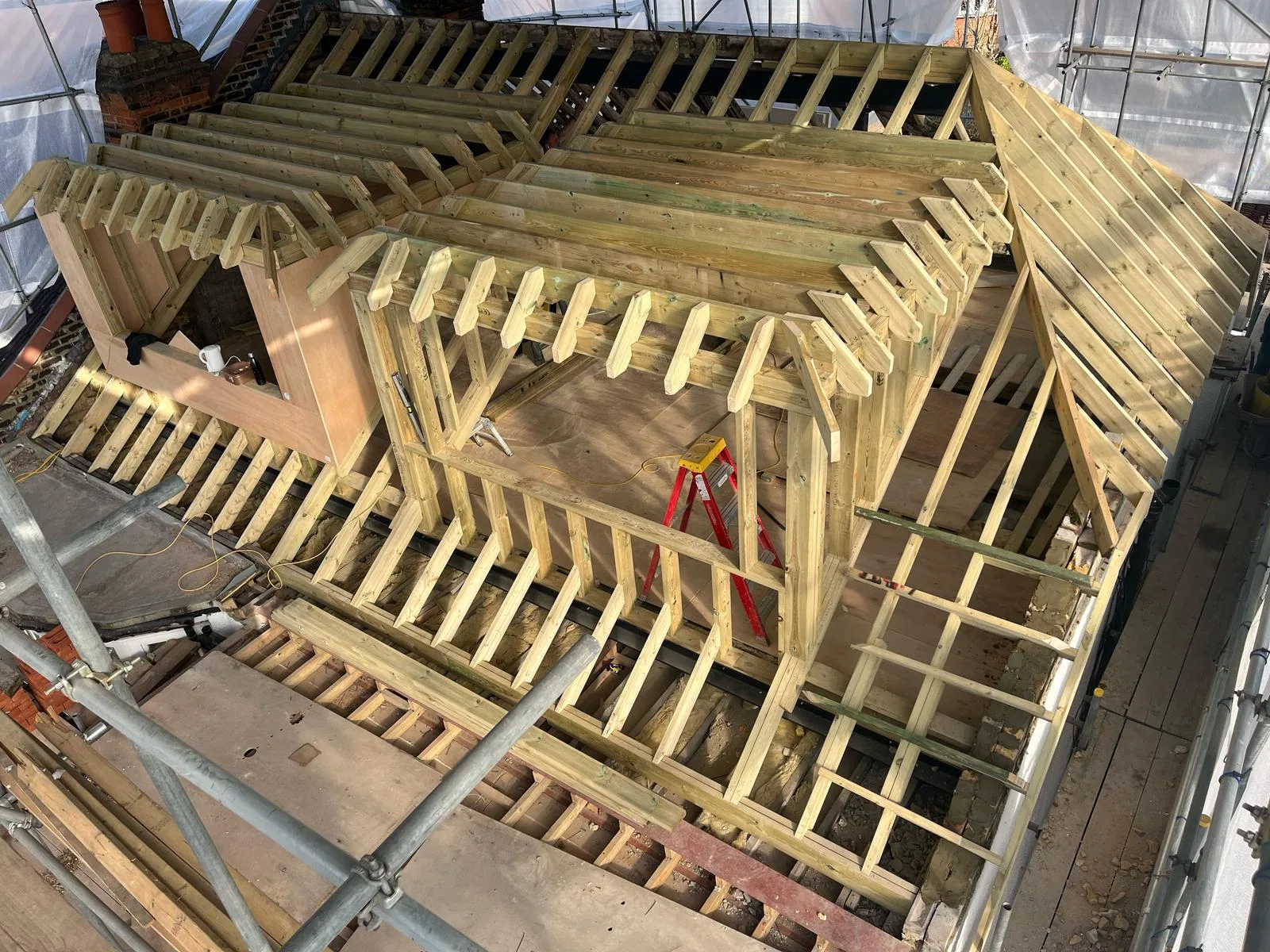
Dormers and Structural Alterations
Dormers are frequently introduced in loft conversions to increase headroom and floor space. These extensions project vertically from the existing roof slope and create usable interior space with vertical walls.
However, the ability to add dormers depends heavily on the original roof structure.
The structural framing of the roof must be modified to accommodate the dormer opening, which often involves reinforcing surrounding rafters and installing new beams.
Certain roof configurations make dormer installation relatively straightforward, while others require substantial rebuilding to maintain structural integrity.
Additionally, planning restrictions may influence dormer size and placement, particularly in conservation areas or on street facing roof slopes.
Staircase Placement Challenges
Access to a loft conversion is typically provided by a staircase connecting the new space to the existing floor below. The placement of this staircase is often one of the most difficult aspects of the design.
Roof structure directly affects where a staircase can be positioned.
The staircase must:
- Provide sufficient headroom along its entire length
- Align with the available floor space below
- Avoid cutting through key structural supports
- Meet building regulation requirements
If roof slopes descend too sharply near the proposed staircase location, headroom may become insufficient. Designers must then adjust the layout or explore alternative staircase configurations.
In many cases, the most practical staircase position is determined by the structural layout of the roof rather than the preferred room arrangement.
Insulation and Ventilation Requirements
Modern building regulations require loft conversions to achieve high levels of thermal performance. This means insulation must be added within the roof structure.
However, insulation layers take up space, reducing the available headroom inside the loft.
Two common insulation approaches are used:
- Insulation between and beneath rafters
- Insulation above the roof structure during re roofing
Both methods affect internal dimensions.
Additionally, ventilation must be maintained within the roof to prevent condensation and moisture damage. This requirement further influences how the roof build up is designed.
Balancing structural limitations with insulation thickness is often a key part of loft conversion planning.
Planning and Structural Engineering Considerations
Every loft conversion project requires structural calculations to ensure that the new design safely supports the building loads.
Structural engineers analyse the existing roof system and determine:
- Which elements can remain unchanged
- Which supports must be reinforced
- Where new steel beams should be installed
- How loads will transfer to the foundations
These calculations ensure that modifications do not compromise the stability of the building.
In some cases, structural limitations may lead to adjustments in the design. For example, reducing room sizes, repositioning walls, or altering roof extensions may be necessary to maintain structural safety.
Working closely with engineers and experienced builders early in the design stage helps prevent costly redesign later in the project.
When Roof Structure Makes Conversion Difficult
Some lofts are technically convertible but may not be practical due to the extent of structural modifications required.
Common challenges include:
- Extremely shallow roof pitches
- Extensive trussed roof frameworks
- Complex intersecting roof shapes
- Limited internal height
- Obstructions such as chimneys or water tanks
In these situations, the cost of structural alteration may approach that of a full roof rebuild.
While such projects are still possible, homeowners must carefully weigh the financial investment against the benefits of the additional space.
Professional assessment is essential before committing to a loft conversion in structurally complex properties.
Why Early Assessment Matters
Many loft conversion difficulties arise when roof structure is not properly assessed during the early planning stages.
A thorough structural survey allows designers to identify limitations and opportunities before developing detailed layouts.
This process helps determine:
- Whether the loft is suitable for conversion
- Which conversion type is most appropriate
- What structural modifications will be required
- How the space can be used most effectively
Early structural evaluation also helps establish realistic project budgets and timelines.
By understanding the roof structure from the beginning, homeowners can avoid unexpected challenges later in the construction process.
Final thoughts
Roof structure is one of the most influential factors shaping loft conversion design. The framing system, roof pitch, internal supports, and overall geometry of the roof determine how much space can be created and how easily that space can be adapted.
While many lofts offer excellent opportunities for additional living space, others present structural constraints that require creative solutions and careful engineering. Understanding these limitations early in the design process allows homeowners and builders to develop realistic plans that balance structural integrity with functional living space.
Successful loft conversions begin with a detailed understanding of the roof above. By assessing the structure thoroughly and designing within its limitations, it becomes possible to transform unused loft areas into practical, comfortable rooms that add both value and usability to a property.
Frequently asked questions
How do I know if my roof structure is suitable for a loft conversion?
A structural survey by an architect or structural engineer is the best way to determine suitability. They will assess roof pitch, framing type, internal supports, and available headroom.
Are trussed roofs impossible to convert?
No, but they are more complex to convert. Trussed roofs require structural redesign because the internal braces that support the roof must be replaced with alternative load bearing solutions.
What roof pitch is best for a loft conversion?
Steeper roof pitches generally provide better headroom and more usable space. Roofs with shallow slopes often require dormers or structural alterations to create adequate room height.
Can roof supports like purlins be removed?
Sometimes. Structural engineers can design replacement beams to redistribute loads if necessary. However, removal must always be carefully calculated to maintain roof stability.
Does roof structure affect loft conversion cost?
Yes. Roofs with complex structures, limited headroom, or truss frameworks often require more extensive structural work, which increases overall project costs.
Can a loft conversion be done if the roof space is small?
In some cases, yes. Designers may use dormers or roof alterations to increase usable space. However, extremely small lofts may not be practical to convert without major reconstruction.
About this guide. Written by the Milkov & Son Construction team and reviewed by Stoyan Milkov, Director & Project Manager. Cost figures are North London market guides for the year stated and not quotations; planning and Building Regulations summaries are general and should be confirmed for your property. About the company.


