
Why Kitchen Extensions Influence the Rest of the House More Than Any Other Space
Kitchen extensions have become one of the most common and impactful home improvements across the UK. While many homeowners begin the process with a practical

Kitchen extensions have become one of the most common and impactful home improvements across the UK. While many homeowners begin the process with a practical goal such as gaining space, improving light, or creating a better place to cook, the reality is that a kitchen extension almost always reshapes the entire house. More than loft conversions, new bathrooms, or even full refurbishments, the kitchen extension tends to redefine how the home functions, feels, and is experienced day to day.
This is because the kitchen is no longer a contained, background space. Over the past two decades, it has evolved into the main living hub of the home. It is where families gather, guests linger, work spills over, and daily routines overlap. When that space is extended, its influence spreads outward, altering circulation routes, changing how rooms are used, and even shifting how people perceive the rest of the property.
For homeowners, developers, and businesses involved in residential construction, understanding this ripple effect is critical. A well-planned kitchen extension can elevate the entire house. A poorly considered one can throw everything else out of balance.
The kitchen sits at the centre of daily life
In most modern UK homes, the kitchen is the most frequently used space. It is not limited to meal preparation. It hosts conversations, homework, remote work, casual dining, and social gatherings. Because of this, any change to the kitchen automatically affects daily patterns across the whole house.
When a kitchen is extended, it often becomes the primary destination within the home. Other rooms adjust their roles around it. Living rooms may become quieter or more formal. Dining rooms may be absorbed into the kitchen layout or repurposed entirely. Even hallways and circulation spaces start to serve the kitchen first, rather than simply connecting rooms.
No other extension has this same level of behavioural impact. A loft conversion may add bedrooms, but it rarely changes how the ground floor functions. A kitchen extension, by contrast, reshapes everyday life from morning to night.
Kitchen extensions redefine how space flows
One of the most immediate effects of a kitchen extension is a change in movement through the house. Older UK homes often have segmented layouts with narrow doorways and clearly defined rooms. Extending the kitchen frequently involves opening up walls, widening thresholds, or reorienting how people move from the front of the house to the rear.
This change in flow can make the home feel larger without increasing its footprint dramatically. Sightlines extend further. Natural light travels deeper into the plan. Spaces that once felt disconnected become visually and physically linked to the kitchen.
Because movement patterns are so fundamental to how a house feels, this reconfiguration influences how every adjacent space is experienced. Rooms that were once pass-throughs may become destinations. Others may become quieter retreats precisely because the kitchen has taken on the role of social centre.
Light from the kitchen spreads across the house
Kitchen extensions often introduce large areas of glazing, such as sliding doors, bi-folds, rooflights, or lanterns. While these features are usually installed to benefit the kitchen, their effect is rarely contained to that space alone.
In open or semi-open layouts, light introduced at the rear of the house can travel into dining areas, family rooms, and even hallways. This can transform spaces that previously relied on artificial lighting for much of the day. The psychological effect of this increased daylight is significant, making the entire home feel more welcoming and spacious.
Other types of extensions may add windows, but few introduce light at such scale or in such strategic positions. Because the kitchen is typically located at the rear or centre of the ground floor, changes to its lighting conditions naturally influence multiple surrounding spaces.
The kitchen extension sets the tone for finishes and quality
Once a kitchen is extended, it often becomes the most modern and visually refined part of the house. New flooring, bespoke cabinetry, integrated lighting, and contemporary glazing systems tend to raise the standard of finish beyond that of the original rooms.
This creates a knock-on effect. Adjacent spaces can feel dated by comparison, prompting homeowners to update flooring, repaint walls, or upgrade joinery elsewhere. Even when no immediate work is carried out, the perception of quality across the home changes.
In this way, the kitchen extension becomes a benchmark. It establishes expectations for materials, detailing, and craftsmanship that subtly influence decisions throughout the rest of the property. Few other renovations have this same ability to reset standards across an entire home.
Kitchen extensions alter how rooms are used
A larger, more functional kitchen often absorbs activities that once took place elsewhere. Informal dining moves out of the dining room. Children do homework at the kitchen island. Adults work from the breakfast bar. Guests congregate around the kitchen rather than the living room.
As these shifts occur, other rooms are freed up to change purpose. Dining rooms may become home offices, playrooms, or snug living spaces. Living rooms may become quieter zones for relaxation rather than all-purpose family rooms.
This redistribution of functions is one of the most powerful ways a kitchen extension influences the rest of the house. It allows the home to be zoned more effectively, with clear distinctions between social, practical, and private areas.
Structural decisions in the kitchen affect the whole building
Kitchen extensions often require significant structural work, including steel beams, altered load paths, and changes to foundations. These interventions are not isolated. They affect how the building behaves as a whole.
Open-plan layouts created during kitchen extensions can influence acoustics, heating efficiency, and even how smells and noise travel through the house. Decisions about ceiling heights, insulation, and ventilation in the kitchen zone often need to be coordinated with systems serving the rest of the property.
Because the kitchen extension is typically the largest structural alteration undertaken, it becomes the point where building performance is either improved holistically or compromised if poorly designed.
Heating and energy use patterns change
Extending the kitchen often involves underfloor heating, new radiators, or upgraded glazing. These changes can alter how heat moves through the ground floor and beyond.
Open-plan kitchen extensions may require different heating strategies to avoid cold spots or overheating. Once these systems are in place, homeowners often find themselves adjusting heating elsewhere to match the comfort level of the new kitchen space.
This leads to a broader reassessment of energy efficiency across the home. Insulation upgrades, boiler replacements, or planning controls frequently follow, all triggered by changes made during the kitchen extension.
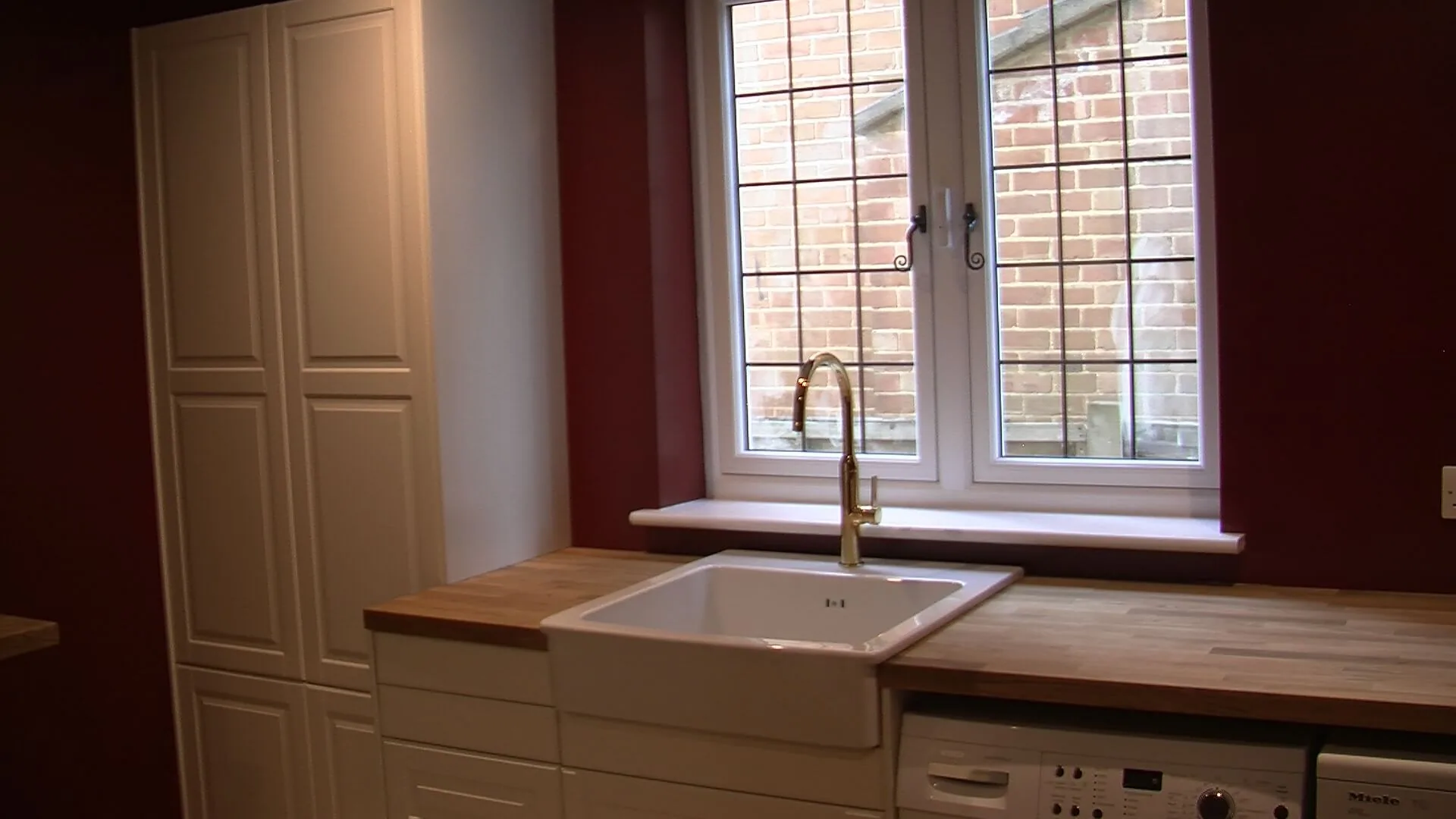
The kitchen extension reshapes indoor-outdoor relationships
By extending the kitchen towards the garden, the boundary between inside and outside is often softened. Large glazed openings encourage frequent use of outdoor spaces and change how the garden is experienced.
This shift affects more than the kitchen. Living areas adjacent to the garden become more connected to outdoor views. Circulation routes may be reoriented to prioritise access to the garden through the kitchen rather than side doors or hallways.
Over time, the garden itself may be redesigned to align with the kitchen extension, reinforcing the kitchen’s role as the anchor point between house and landscape.
Property value perceptions are anchored in the kitchen
When buyers view a home, the kitchen carries disproportionate weight in shaping their overall impression. A well-designed kitchen extension can make an entire property feel higher value, even if other areas remain relatively modest.
Estate agents frequently market homes around their kitchen extensions, using them as visual shorthand for quality, lifestyle, and modern living. This perception extends to the rest of the house, influencing how buyers interpret room sizes, layouts, and potential.
Because of this, the kitchen extension often delivers value beyond its square metre cost. It reframes how the entire home is judged.
Kitchen extensions influence future renovation decisions
Once a kitchen extension is complete, it often dictates how future improvements are approached. Flooring levels, ceiling heights, and material choices established in the extension can limit or guide what is practical elsewhere.
Homeowners may choose to renovate other areas incrementally, using the kitchen extension as a reference point. In this way, the kitchen extension becomes the long-term organising principle for future changes.
This influence can last for decades, shaping how the house evolves over time.
Final thoughts
Kitchen extensions exert a level of influence unmatched by any other home improvement. Their impact extends far beyond added floor area, reshaping how the house functions, how spaces are perceived, and how daily life unfolds. Because the kitchen sits at the heart of modern living, changes to it naturally ripple outward, affecting movement, light, comfort, and behaviour throughout the home.
For homeowners and professionals alike, this makes the kitchen extension both an opportunity and a responsibility. When planned with the wider house in mind, it can elevate every room it touches. When treated as an isolated project, it risks creating imbalance and inefficiency.
Frequently asked questions
Why does a kitchen extension affect other rooms more than a loft conversion?
A loft conversion typically adds private space such as bedrooms or bathrooms without altering how the main living areas function. A kitchen extension changes how the ground floor is used daily, affecting circulation, light, and social patterns across multiple rooms.
Can a kitchen extension make a house feel unbalanced?
Yes, if the extension is significantly more modern or open than the rest of the house, it can create contrast that feels jarring. Careful design can help ensure the new space enhances rather than overwhelms existing rooms.
Do kitchen extensions always need open-plan layouts?
No, although open-plan designs are common. Semi-open layouts using internal glazing, partial walls, or sliding doors can still allow the kitchen to influence the rest of the house while maintaining separation where needed.
How early should the rest of the house be considered when planning a kitchen extension?
Ideally from the very start. Decisions about layout, structure, and services in the kitchen extension should be made with the wider house in mind to avoid costly adjustments later.
Does extending the kitchen increase running costs?
It can, particularly if the space is poorly insulated or over-glazed. However, modern construction methods often improve overall energy efficiency, which can offset increased space.
Is a kitchen extension worth it if the rest of the house is not renovated?
In many cases, yes. A well-designed kitchen extension can significantly improve daily living and property value even if other areas remain unchanged, though visual contrast should be managed carefully.
About this guide. Written by the Milkov & Son Construction team and reviewed by Stoyan Milkov, Director & Project Manager. Cost figures are North London market guides for the year stated and not quotations; planning and Building Regulations summaries are general and should be confirmed for your property. About the company.


