
Why Some Renovations Create New Problems Instead of Solving Old Ones
A renovation is usually undertaken with a clear goal in mind. Homeowners and businesses invest significant time and money into improving a space, whether

A renovation is usually undertaken with a clear goal in mind. Homeowners and businesses invest significant time and money into improving a space, whether they want better functionality, improved aesthetics, increased property value, or a more comfortable environment. A well-executed renovation can transform a dated, inefficient room into a space that works effortlessly for everyday life.
However, not every renovation delivers the results people expect. Some projects solve one issue only to introduce several new frustrations. A kitchen extension may provide additional floor area but create a layout that feels awkward. A beautiful natural stone worktop may be chosen for its visual appeal, but the wrong finish or colour could make maintenance more challenging than anticipated. A modern redesign might look impressive in photographs but fail to meet the practical demands of daily use.
Many of these problems are not caused by poor materials or bad ideas. They often result from a lack of planning, failing to consider how the space will actually be used, or focusing too heavily on current design trends rather than long-term practicality.
Understanding the common mistakes that lead to problematic renovations allows homeowners and businesses to make better decisions. Whether selecting natural stone, composite stone, flooring, cabinetry, layouts, or architectural features, every choice should contribute towards creating a space that performs as well as it looks.
Designing Around Appearance Rather Than Everyday Function
One of the most common reasons renovations fail to meet expectations is because appearance becomes the main priority while practicality receives less attention. There is nothing wrong with wanting a stunning space. Materials such as marble, granite, quartz, and other stone surfaces can create an impressive visual impact, especially when they are carefully matched with the overall design.
The issue occurs when a design decision is made purely because it looks attractive without considering how it will perform in real life. For example, a business may install a striking reception desk made from a highly polished dark stone because it creates a luxurious first impression. However, if the surface constantly shows fingerprints, dust, and minor marks, the day-to-day maintenance requirements may become frustrating.
Similarly, homeowners sometimes choose oversized kitchen islands because they appear desirable in design magazines, but the island can restrict movement if there is not enough surrounding space. A room that feels crowded after a renovation is not necessarily smaller than before; it simply may not have been planned with circulation and usability in mind.
The most successful renovations balance beauty and practicality. Every material, shape, finish, and layout decision should support the way people use the space.
Choosing Materials Without Understanding Their Characteristics
Natural and engineered materials all have their own strengths and considerations. A common mistake during renovations is assuming that every stone surface behaves in exactly the same way.
Natural stones such as marble and some limestones may require more attention when exposed to acidic substances, while granite and quartzite often offer excellent durability. Composite stone surfaces can provide consistency in colour and pattern and are designed to withstand the demands of many busy environments.
Problems occur when the chosen material does not match the way the space will be used. A kitchen that experiences frequent cooking, children preparing snacks, or heavy entertaining will have different requirements compared with a decorative bar area that receives occasional use.
Businesses must consider this carefully as well. A restaurant counter, hotel reception area, office workspace, or retail display experiences repeated contact from employees and customers. The wrong surface selection can lead to unnecessary maintenance, visible wear, or dissatisfaction with the final result.
A successful renovation begins with understanding the environment and selecting materials that suit those conditions rather than choosing solely based on appearance.
Creating More Space but Losing Comfort
Many renovation projects are focused on increasing the amount of available space. Extensions, open-plan layouts, and removing internal walls are all popular choices because they can make properties feel larger and brighter.
However, more space does not automatically mean a better space.
A large open-plan room can create problems with noise, privacy, temperature control, and organisation. A family kitchen that previously had separate areas for cooking and relaxing may become one large space where conversations, televisions, appliances, and everyday activity compete with each other.
Businesses can experience similar problems. An office renovation designed around an open environment may encourage collaboration, but if there are no quiet areas for concentration or private meetings, productivity can suffer.
The best renovations consider how different activities happen within the same area. Clever planning, furniture placement, lighting, flooring changes, and carefully selected stone surfaces can help define spaces without losing the benefits of an open design.
Ignoring How Natural Light Changes Throughout the Day
Lighting plays a significant role in how a renovation feels once it is completed. A material that appears perfect under showroom lighting may look entirely different in the actual environment.
Natural stone, composite surfaces, paint colours, and finishes all interact with light differently. A dramatic veined stone may become the centrepiece of a bright kitchen, while the same design could feel overwhelming in a smaller or darker room.
Highly reflective surfaces can create excessive glare in areas with strong sunlight. Very dark materials may absorb light and make a room feel smaller if they are not balanced with lighter surrounding elements.
This is why viewing samples within the actual space and considering morning, afternoon, and evening light conditions is so important.
Renovations that ignore lighting often result in rooms that feel different from what the owner originally imagined.
Following Trends Without Thinking About Longevity
Design trends can provide inspiration, but building an entire renovation around a temporary style can create regret in the future.
A colour, texture, or layout that feels modern today may become dated much faster than expected. Since renovations involve substantial investment, most people want their spaces to remain attractive for many years.
Timeless materials such as natural stone have remained desirable for centuries because they can adapt to changing design preferences. The same principle applies to layouts and structural decisions. A kitchen designed around practical movement and quality materials is likely to remain successful longer than one created purely to follow current trends.
This does not mean a renovation must be plain or lacking personality. Unique features, bold stone patterns, and distinctive design choices can work extremely well when they are integrated thoughtfully and supported by practical planning.
Overlooking Maintenance Requirements
Every material requires some level of care. Problems arise when the amount of maintenance needed does not match the owner's expectations or lifestyle.
For example, a high-gloss surface may deliver a sleek and elegant appearance, but it may reveal fingerprints and smudges more easily. Some natural stones require sealing to maintain their resistance to stains, while different finishes can influence how visible everyday wear becomes.
A renovation should make life easier, not create a long list of new tasks.
Businesses especially need to consider cleaning and maintenance because surfaces are often used by many people throughout the day. A restaurant, office, or retail environment needs materials that maintain their appearance with realistic cleaning routines.
Discussing maintenance requirements before making a final decision helps prevent disappointment later.
Poor Storage Planning Creates Everyday Frustrations
Storage is one of the areas most frequently underestimated during renovations. A room may look spacious and uncluttered immediately after completion, but once everyday items return, the lack of practical storage quickly becomes obvious.
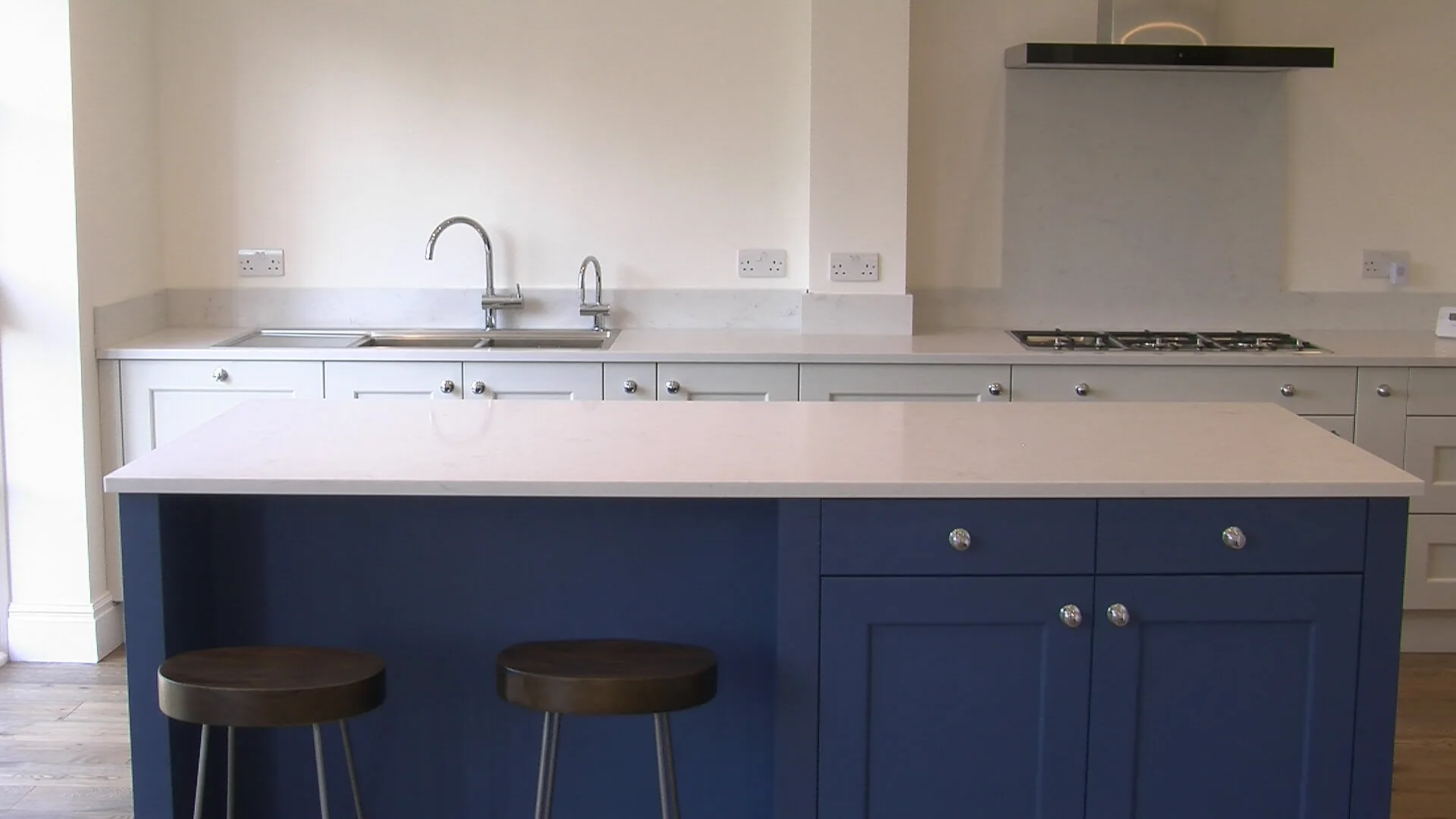
A kitchen with beautiful stone worktops may lose much of its visual appeal if small appliances, utensils, and food containers constantly remain on display because there is nowhere else to store them.
Commercial environments face the same challenge. A stylish reception area or showroom needs practical places to keep paperwork, equipment, cleaning products, and other necessary items hidden but easily accessible.
Good storage planning ensures that the renovated space continues to look organised long after the builders have left.
Forgetting About How People Move Through a Space
The way people move around a room has a huge influence on whether a renovation feels successful.
Walkways that are too narrow, furniture placed too closely together, or poorly positioned work surfaces can make a space frustrating to use. This is especially important in kitchens where cooking, cleaning, preparing food, and socialising often happen simultaneously.
Businesses must also consider customer and employee movement. A reception area should welcome visitors without causing congestion, and a workspace should allow employees to move efficiently throughout the day.
Before finalising a renovation, it is essential to imagine the normal routines that will happen in the space. The most attractive design is ineffective if everyday movement feels restricted.
Underestimating the Importance of Professional Advice
Many renovation problems could be prevented through professional guidance. Architects, designers, stone specialists, and experienced installers understand factors that may not be obvious during the early planning stages.
For example, selecting a natural stone worktop involves more than choosing a colour. Professionals can advise on thickness, edge profiles, finishes, durability, maintenance, and suitability for the intended environment.
Experienced professionals can also identify potential issues with layouts, lighting, structural changes, and material combinations before they become expensive mistakes.
Although professional advice represents an additional cost at the beginning of a project, it often prevents much larger expenses and disappointments later.
Final thoughts
A successful renovation should improve the way a space looks, feels, and functions. While beautiful materials and modern designs are important, they must be supported by practical planning and a clear understanding of everyday requirements.
Many renovation problems occur because decisions are made without considering maintenance, movement, storage, lighting, or the specific demands placed on different surfaces. Whether choosing natural stone, composite stone, layouts, or decorative features, every element should contribute towards a space that remains enjoyable and efficient for years to come.
The best renovations do not simply replace old problems with new ones. They solve existing challenges while creating a balanced environment where appearance, durability, comfort, and usability work together.
Frequently asked questions
1. Why do some renovations feel less practical after completion?
This usually happens when visual design is prioritised over functionality. A space may look impressive but fail to support everyday activities, movement, storage, or maintenance needs.
2. Are natural stone surfaces a good choice for renovations?
Yes, natural stone can be an excellent choice because of its durability, unique appearance, and long lifespan. The key is selecting the right type of stone and finish for the specific environment.
3. How can I avoid choosing materials that become difficult to maintain?
Ask about cleaning requirements, sealing needs, resistance to stains and scratches, and how the surface will age over time. Choosing a material that matches your lifestyle or business demands is essential.
4. Is an open-plan renovation always the best option?
Not necessarily. Open-plan spaces can provide brightness and flexibility, but they must be carefully designed to manage noise, privacy, storage, and the separation of different activities.
5. Why should I consider lighting when selecting stone surfaces?
Light affects how colours, patterns, and textures appear. Viewing samples in the actual environment helps ensure the material looks right throughout the day.
6. What is the biggest mistake people make during renovations?
One of the biggest mistakes is making decisions based only on appearance or current trends rather than considering long-term functionality, maintenance, and how the space will actually be used.
About this guide. Written by the Milkov & Son Construction team and reviewed by Stoyan Milkov, Director & Project Manager. Cost figures are North London market guides for the year stated and not quotations; planning and Building Regulations summaries are general and should be confirmed for your property. About the company.


