
Why Ceiling Height Changes Can Make Extensions Feel Unbalanced
Home extensions are often designed to create more space, improve functionality, and increase property value. Homeowners frequently focus on floor area,

Home extensions are often designed to create more space, improve functionality, and increase property value. Homeowners frequently focus on floor area, layout, natural light, and finishes while overlooking one important design element: ceiling height.
A well-designed extension should feel like a natural continuation of the original property. However, when ceiling heights differ significantly between old and new spaces, the result can feel awkward, disconnected, and visually unbalanced. Even when expensive materials, quality workmanship, and attractive layouts are used, inconsistent ceiling heights can affect how people experience the space.
This issue becomes particularly noticeable in open-plan extensions where existing rooms connect directly to new areas. Walking from one section of the property to another can create a sense of imbalance if ceiling proportions have not been carefully considered.
For businesses involved in natural stone, composite stone, and premium interior finishes, understanding the relationship between ceiling height and spatial perception is especially important. Worktops, flooring, feature walls, and stone installations often play a significant role in defining the visual balance of an extension.
The Psychology of Interior Proportions
People naturally respond to proportions within a space, even if they cannot explain exactly why a room feels comfortable or uncomfortable.
Ceiling height influences how a room feels emotionally and physically. High ceilings often create feelings of openness, freedom, and luxury. Lower ceilings can feel cosy and intimate. Problems arise when transitions between ceiling heights feel abrupt or inconsistent.
When someone moves from a room with an eight-foot ceiling into an extension with a significantly higher or lower ceiling, the contrast can create visual tension. The brain immediately notices the change, which can make the extension feel disconnected from the original structure.
A successful extension creates a sense of flow. Ceiling heights play a major role in achieving that continuity.
Why Extensions Often End Up With Different Ceiling Heights
There are many practical reasons why extensions develop ceiling height differences.
Structural Constraints
Existing buildings often have fixed floor levels, roof lines, and structural limitations. Designers may need to work around these elements when planning an extension.
For example, a rear extension may require additional roof insulation or structural beams that affect the finished ceiling height.
Planning Restrictions
Local planning requirements may limit the overall height of an extension. Designers sometimes compensate by adjusting internal ceiling heights to comply with external restrictions.
Budget Considerations
Increasing ceiling height usually increases construction costs. Higher walls, larger structural components, additional materials, and increased labour requirements can all affect the budget.
Some projects reduce ceiling heights to control costs, even if doing so creates proportion challenges.
Existing Property Characteristics
Older homes often have unusually high ceilings. Matching these heights in a modern extension can be difficult or expensive.
Conversely, some properties have relatively low ceilings, and designers may intentionally increase ceiling heights in the extension to improve the feeling of space.
While either approach can work, transitions must be handled carefully.
The Impact on Visual Flow
One of the biggest issues caused by changing ceiling heights is disruption to visual flow.
In modern homes, particularly open-plan layouts, the eye naturally travels through connected spaces. When ceiling heights change dramatically, that visual journey can feel interrupted.
The extension may appear like an addition rather than an integrated part of the property.
This is particularly noticeable in:
- Kitchen extensions
- Rear extensions
- Open-plan kitchen-dining areas
- Garden room extensions
- Side return extensions
Even when the floorplan works well, inconsistent ceiling proportions can make the overall design feel less cohesive.
How Ceiling Height Affects Natural Light
Natural light and ceiling height work closely together.
Higher ceilings often allow for:
- Larger glazing systems
- Roof lanterns
- Skylights
- Clerestory windows
- Greater light distribution
When an extension has a significantly higher ceiling than the original home, the extension may feel bright and airy while adjacent rooms feel darker and more enclosed.
This contrast can unintentionally make the original property seem dated or cramped.
Similarly, if an extension has lower ceilings than surrounding spaces, it may feel less inviting despite receiving adequate natural light.
Balancing ceiling heights helps maintain a consistent lighting experience throughout the property.
The Relationship Between Ceiling Height and Stone Features
Natural stone and composite stone installations are often focal points within extensions.
Large kitchen islands, feature walls, flooring systems, splashbacks, and stone-clad architectural elements interact directly with room proportions.
Stone Worktops
Premium stone worktops often create a sense of permanence and luxury.
In extensions with disproportionately high ceilings, smaller worktops may appear visually insignificant. Conversely, in low-ceiling environments, oversized islands can dominate the room.
Designers must consider both horizontal and vertical proportions when selecting stone features.
Stone Feature Walls
Feature walls can look spectacular in double-height spaces or extensions with elevated ceilings.
However, if the wall continues into a lower-ceiling section of the property, the transition can feel abrupt.
Careful planning helps ensure stone installations complement the overall proportions of the home.
Stone Flooring
Continuous stone flooring is frequently used to connect original homes with new extensions.
While flooring can visually unify spaces, ceiling height differences may still create separation. Designers often use flooring alongside other techniques to minimise perceived imbalance.
Why Higher Ceilings Are Not Always Better
Many homeowners assume higher ceilings automatically improve an extension.
In reality, excessive height can create challenges.
Loss of Human Scale
Rooms need appropriate proportions.
An extension with very high ceilings but limited floor area can feel narrow and awkward. The space may seem vertically oversized compared to its footprint.
Furniture Proportion Issues
Standard furniture is designed around typical room dimensions.
In rooms with unusually high ceilings:
- Cabinets may appear too small
- Artwork can seem undersized
- Kitchen units may look disconnected
- Lighting fixtures may appear lost
The extension may feel unfinished even when fully furnished.
Increased Heating Requirements
Larger air volumes require more energy to heat effectively.
While this does not directly affect aesthetics, comfort levels influence how people perceive a space. An extension that feels cold can feel less welcoming regardless of design quality.
When Lower Ceilings Create Problems
Lower ceilings can create challenges of their own.
Compression Effect
Moving from a higher-ceiling room into a lower extension can create a feeling of compression.
The extension may feel smaller than it actually is.
Reduced Sense of Openness
Many homeowners choose extensions specifically to gain a greater feeling of space.
If the ceiling height feels restricted, the extension may fail to deliver the desired experience.
Reduced Visual Value
Potential buyers often associate generous ceiling heights with quality and value.
A low-ceiling extension can sometimes undermine the perceived quality of an otherwise attractive renovation.
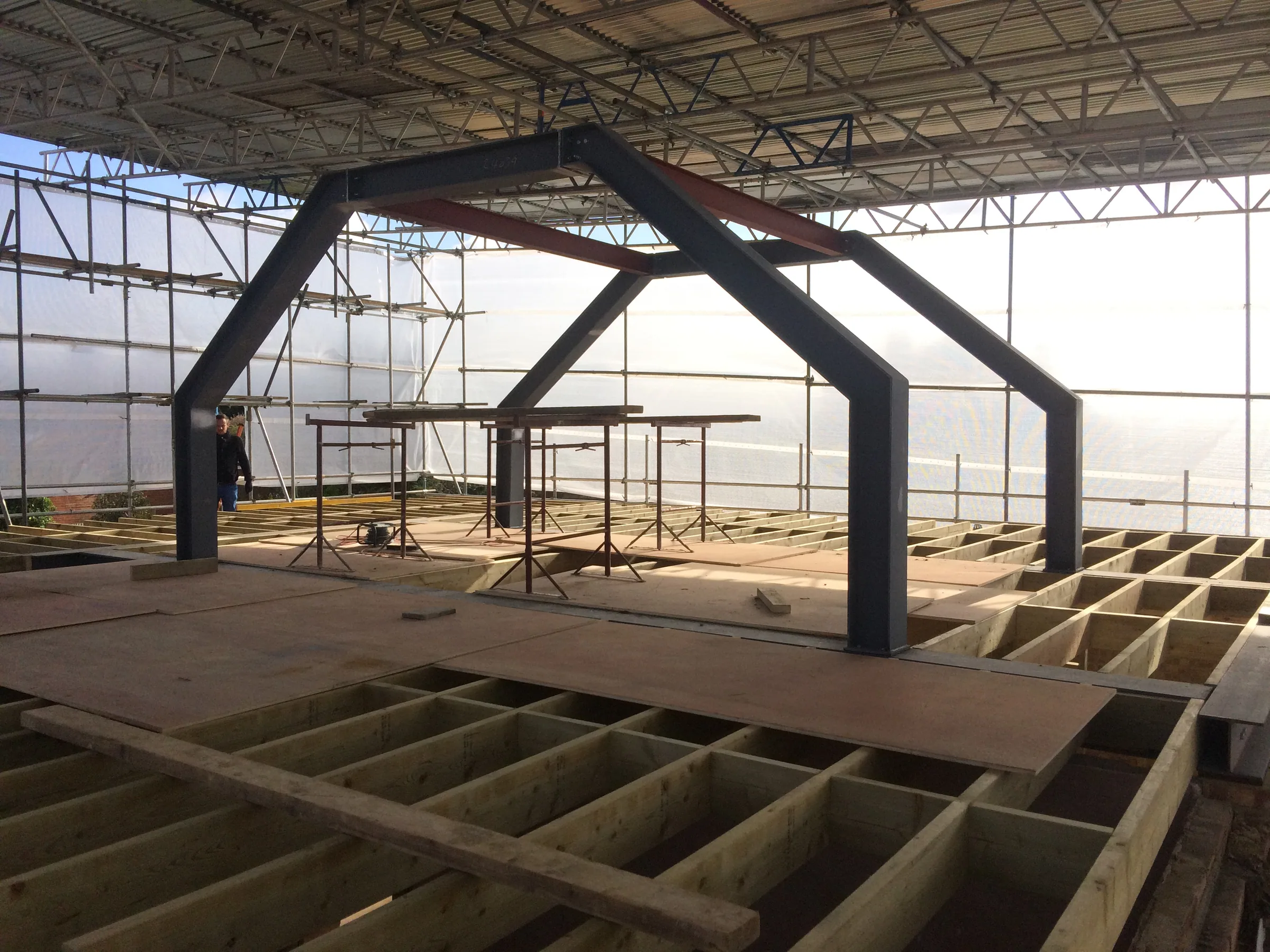
Creating Better Transitions Between Ceiling Heights
Not every extension can maintain identical ceiling heights throughout.
The key is creating transitions that feel intentional.
Use Architectural Features
Beams, bulkheads, and structural elements can help define changes in ceiling height.
When integrated thoughtfully, these features make transitions appear deliberate rather than accidental.
Create Functional Zones
Different ceiling heights can help distinguish areas within open-plan spaces.
For example:
- Lower ceilings above kitchens
- Higher ceilings above dining spaces
- Vaulted ceilings in living areas
The variation feels purposeful when aligned with room function.
Introduce Gradual Changes
Stepped ceilings, partial vaulting, and carefully designed transitions can soften visual contrasts.
Gradual changes are generally less jarring than sudden shifts.
How Material Choices Help Balance Proportions
Materials can significantly influence how ceiling heights are perceived.
Natural Stone
Stone adds visual weight and permanence.
Large-format stone surfaces can anchor spaces and help balance rooms with higher ceilings.
Composite Stone
Composite stone provides consistency in colour and pattern, making it useful for maintaining visual continuity between old and new spaces.
Timber Elements
Wooden ceiling features can visually lower overly tall rooms and create a more comfortable scale.
Lighting Design
Lighting can emphasise or soften ceiling height differences.
Pendant lights, wall lighting, and integrated architectural lighting all influence spatial perception.
The Importance of Early Design Planning
Ceiling height decisions should be made early in the design process.
Unfortunately, many projects focus primarily on floorplans and external appearance while leaving ceiling considerations until later.
Early planning allows designers to evaluate:
- Structural requirements
- Roof design
- Window placement
- Stone feature integration
- Lighting layouts
- Furniture proportions
Addressing these factors from the beginning often produces more balanced results.
Why Balance Matters More Than Size
Many successful extensions are not necessarily the largest.
The most effective projects create spaces that feel comfortable, connected, and harmonious.
A modest extension with well-balanced ceiling heights often feels more successful than a larger extension with awkward proportions.
Balance affects how people experience a space every day. It influences comfort, usability, visual appeal, and long-term satisfaction.
When ceiling heights are carefully considered alongside materials such as natural stone and composite stone, extensions are more likely to feel integrated with the existing property rather than added onto it.
Final thoughts
Ceiling height is one of the most influential yet frequently overlooked elements in extension design. While homeowners often focus on floor area, layouts, glazing, and finishes, ceiling proportions have a major impact on how a space feels and functions.
Significant changes in ceiling height can create visual imbalance, interrupt flow, affect natural light distribution, and alter the relationship between architectural features and interior finishes. This is especially important when incorporating premium materials such as natural stone and composite stone, which rely heavily on proportion and scale to achieve their full visual impact.
A successful extension is not simply about creating more space. It is about creating a space that feels connected, comfortable, and cohesive. By carefully considering ceiling height from the earliest stages of design, homeowners and businesses can avoid common proportion issues and create extensions that feel balanced, welcoming, and architecturally complete.
Frequently asked questions
1. Can different ceiling heights work well in an extension?
Yes. Different ceiling heights can be highly effective when the transitions are intentional and support the overall design concept.
2. Do higher ceilings always make a room feel larger?
Not necessarily. While higher ceilings can create openness, poor proportions may make a room feel awkward rather than spacious.
3. How do ceiling heights affect stone worktops?
Ceiling height influences how worktops are visually perceived. Larger spaces may require more substantial stone features to maintain balance.
4. Can stone flooring help connect spaces with different ceiling heights?
Yes. Continuous stone flooring can improve visual continuity and help reduce the sense of separation between old and new areas.
5. What is considered a comfortable ceiling height?
This varies by property and room function, but ceilings between approximately 2.4 and 2.7 metres are commonly considered comfortable and versatile.
6. Should ceiling height be discussed before choosing finishes?
Absolutely. Ceiling height influences lighting, furniture scale, material selection, and overall room proportions, making it an important early design consideration.
About this guide. Written by the Milkov & Son Construction team and reviewed by Stoyan Milkov, Director & Project Manager. Cost figures are North London market guides for the year stated and not quotations; planning and Building Regulations summaries are general and should be confirmed for your property. About the company.


